wolqotd #2
I did tell Ico that I'd write my answer in this blog, so here's the second wolqotd, courtesy of them:
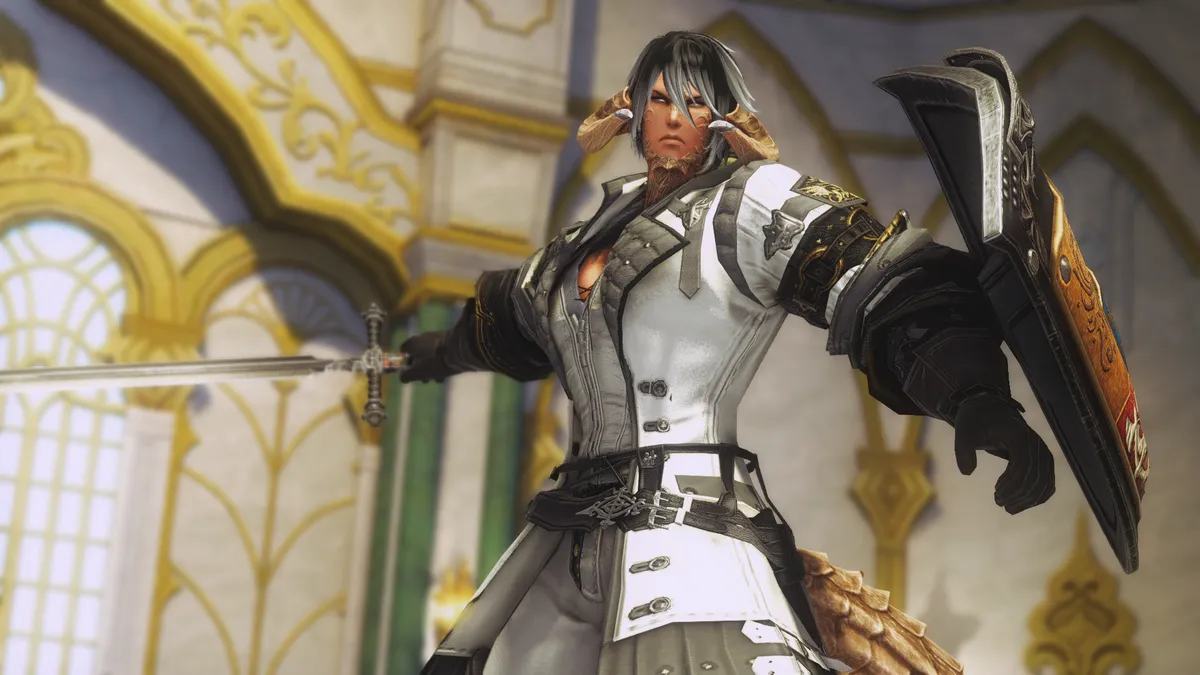
At some point between 2023 and last year, I decided to revive a character I had written off as dead by patch 4.4 - a Raen Au Ra named Tsukishiro Takegane (or Shiro, as I love to affectionately call him). It was a decision fueled out of spite (but that's a story for another day), and I realized there's so much of Shiro that I wanted to write about, so I decided to bring him back from the proverbial dead.
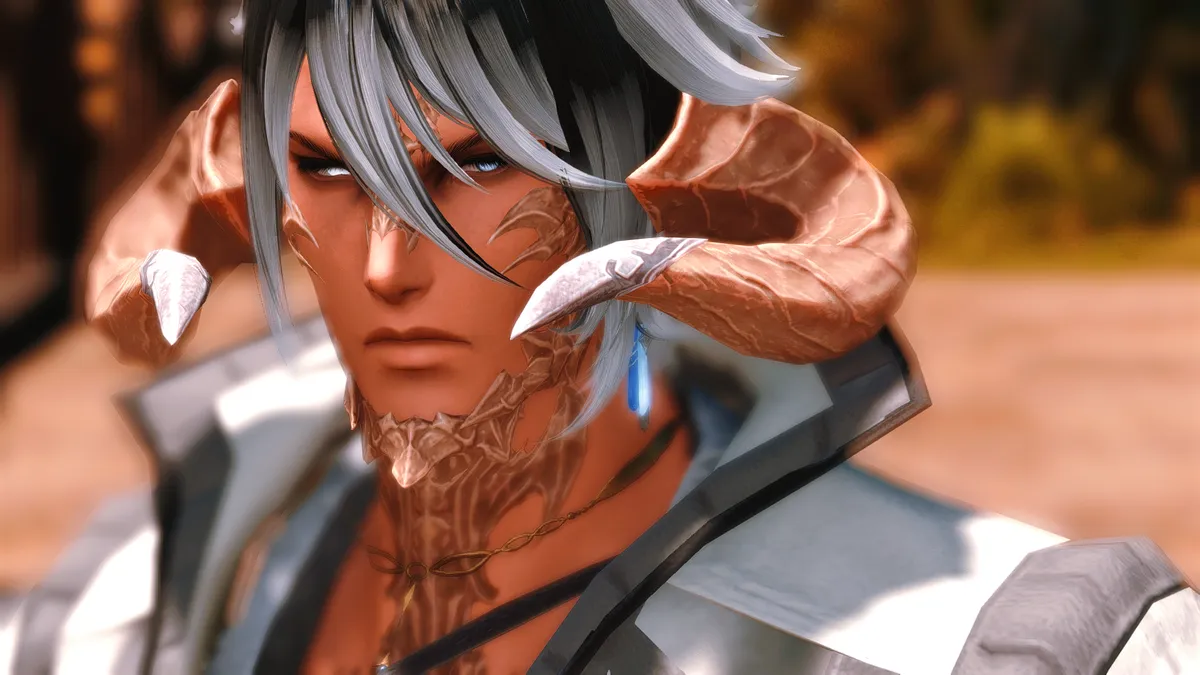
At first I wanted to retain his gender expression as being a cis man, like Nix. But at some point, I began playing with the idea of him being trans - but I wanted to explore his gender identity through my personal lens of being a trans, Muslim and Southeast Asian man in a society where there's a pervasive culture that being born a "woman" came with a lot of expectations based on your sex.
Shiro's backstory in brief
Growing up, being born the eldest daughter of his immediate family, he was expected to serve in ways that were expected of women - though my headcanon is that Doman women can be whatever they choose to be, many still hold traditional, restrictive views of what they should be or do. It didn't help that Shiro's father then was a key figure that led to Doma being annexed as Garlean territory, all for the sake of power.
Some key things to note about this:
- The Takegane family & associated clans have loyally served the Rijin family since Ganen Rijin's time.
- Women of the Takegane clan have a proud, notable history of being leaders & heads of house, and are always afforded the same education and training as the men of the clan.
Shiro wasn't afforded any of these growing up as a girl. He wasn't given the same training or honor - the father already isolating him from the branch of the family that severed all ties with him (led by his daughter from a previous marriage) the moment Shiro was born - and instead was forced to learn to be subservient, to be expected to stay at home, to serve obediently, to not talk back or protest when given orders, to respect a man no matter what. While he did break off eventually to join the "rebel family" side with his younger brother, and learned to be a Takegane the way he should have been - he was eventually forced into an agreement to be sent to Garlemald to be a servant to "an important dignitary's household". In the father's twisted mind, sending Shiro there would finally vanquish the idea that he could be anything more than a meek woman.
Nobody expected the "dignitary" in question to be the Galvus family itself, and certainly no one expected Shiro to be in direct service to a young Zenos - the only aan that even has the privilege to serve where traditionally serving someone of such high standing is a rather restricted position. However, in the walls of the Imperial palace, Shiro found an unlikely pocket of liberation: as Zenos' personal retainer, Shiro's expected and afforded the same military training that would have been reserved only for the elite "pureblood" families. It was a necessary accommodation, they rationalized. The Auri "girl" needs to have the ability to protect "her" charge after all. It wouldn't do for the servant girl to die three months in and put the young prince at significant risk.
"Servant girl", "maid", "Doman wench" - at some point Shiro was deeply sick of being referred to as such. He had enough of the expectation that he must serve one way or the other simply for the crime of being born as a woman. Thus, one quiet night he demanded a private audience of old Solus zos Galvus, citing that he was sick of being continuously referred to as a "sopping maidservant to the prince" when he had enough training to take down a squadron on his own at that point. "Acknowledge me as a man, or I'll kill Zenos and then myself ere the sun rises," he threatened.
In response, the Emperor simply laughed and handed him a potion - a fantasia, though not strong enough to encourage a full change, it'd give Shiro the appearance, voice and stature of a man the way he desperately wished to be seen. "Oh, but do bear in mind," the old emperor said, "I'm not giving this to you for free. I'll be collecting my end of this little bargain when the time's right." Ominous threat and skepticism of the liquid's efficacy nonwithstanding, Shiro took the leap of faith and drank it all before going to bed that night.
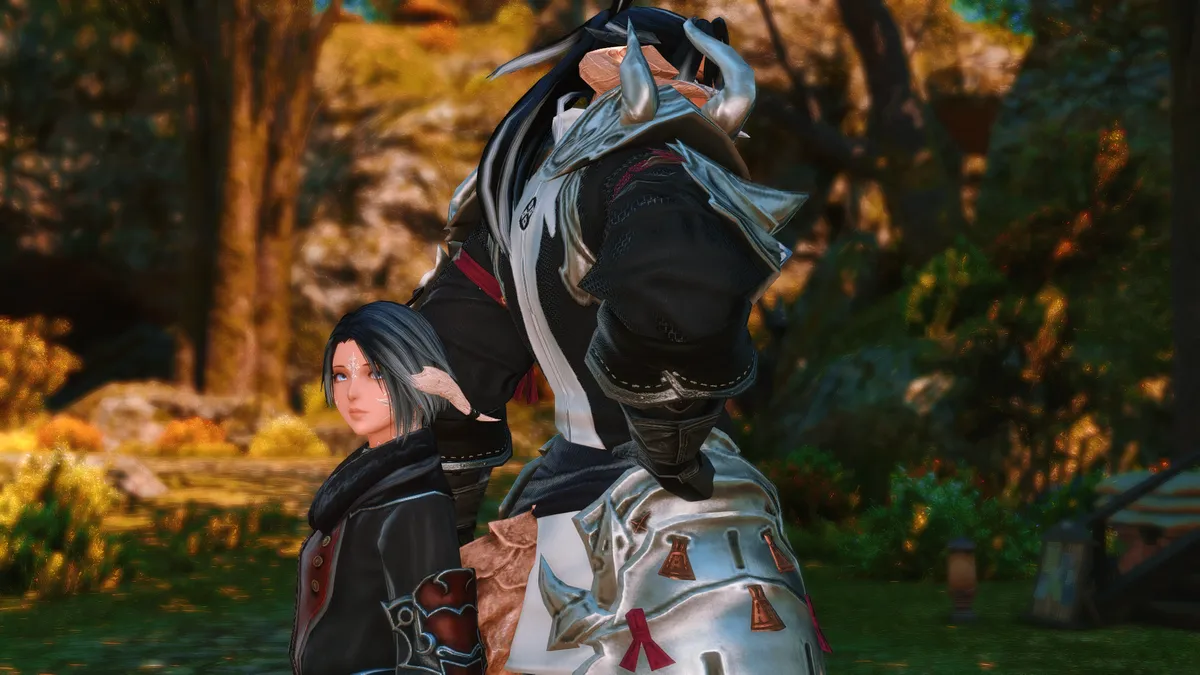
The next morning he woke up to a mildly perplexed Zenos, and found his clothes had been ripped completely in his sleep. He was no longer the small Auri woman that arrived in Garlemald frightened for his life - instead, he was a tall, imposing Auri man with a singular goal in mind: return to his homeland and make his father pay for the suffering he had caused.
My own backstory (aka the grief of being a Muslim AFAB in a society that misinterprets its own teachings)
Unlike Shiro, alhamdulillah my immediate family didn't force any of Shiro's father's bullshit onto me. Sure,there are some expectations (e.g. I'd get chastised a little if I wanted to dress masc to a traditional Malay wedding, and I HAVE to wear baju kurung or something to be 'respectful'), but growing up I wasn't forced to perform anything simply because I was perceived as a woman. I'm allowed to speak my mind, I'm allowed to participate in anything I want even if it's a "man's" avenue or activities, I was taught that the responsibilities of the home are equal responsibilities regardless of sex and gender. My fem friends of the same ethnicity and religion often tell me they find it "interesting" that cooking and cleaning duties are more often done by men in my family, and the following sentiment I hear from them are usually "I wish my family was like that. They get so weird and judgy if I don't pick up the slack or ask them to shoulder the responsibility. It's kind of exhausting to be a Malay/Muslim woman sometimes, but what can you do? Islam taught us like that."
Narrated Al-Aswad:
I asked `Aisha what did the Prophet (ﷺ) use to do at home. She replied. "He used to keep himself busy serving his family and when it was time for the prayer, he would get up for prayer." (Sahih al-Bukhari, 6039)
Narrated Hisham:
I asked 'Aisha, 'What did the Prophet, may Allah bless him and grant him peace, do in his house?' She replied, 'He did what one of you would do in his house. He mended sandals and patched garments and sewed. (Al-Adab Al-Mufrad 540)
[Note: there are several other hadiths like this that also bring up the fact that the Prophet Muhammad (ﷺ) would also milk their goats. Also important to note that they had servants to help in the house as well.]
These two hadith/sunnah are often brought up to show how Islam doesn't enforce traditional gender roles, and for good reason - it showed that the prophet Muhammad (ﷺ) would do chores that traditionally would be associated with women. These hadith are often used to encourage men to share in on the housework and family responsibilities with the women of the house, and these days this idea has been gaining more and more traction as we realize the state of our economy and society means the idea of "women being kept at home to manage the house while men are the sole breadwinners of the family" isn't relevant or compatible any more.
Yet people - men, more notably, still hold on to this idea anyway. Tweet out a statement about how men should help their wives and moms at home more, or that women should be independent in some way or another, and you get thousands of cishet men telling you that you won't be seeing Jannah for being "wicked at hearts for defying your fathers or husbands & embarrassing your brothers" for some fucking reason. In some extreme cases, even a simple request can lead to violent consequences not unlike what Shiro's father had done to Shiro - though I do need to emphasize this sort of thing is present on many non-Muslim communities, not just strictly Muslim.
I never got that from my dad or my brothers, and I certainly don't think my family's a rare outlier - but the fact that this pervasive, restrictive idea is being sold to millions of people as "Islamic" is painful. Even if my dad would never think of forcing me into such a restrictive box when he knows I have so much more to my person, the pressure is still there coming from other men and women. The teachers that chide me for "acting too much like a boy, be a proper girl instead". Some family friends that keep making comments about my body, how I'd be "great wife material" from old uncles and aunts. What makes this even more frustrating is that it wasn't just coming from the Muslim Malay side of my identity - it also is coming from the Christian Dayak side of my identity (my mom's a Berawan revert that embraced Islam before she hit a legal age to officially do so).
At some point the frustration and anger was partly what spurred me into exploring my own gender in a similar way Shiro did. Shiro's story was something I hear all too common, and in a way that's how I process that specific pain that myself and countless other Muslim (and non-Muslims raised in a religious community, I'm sure) trans & nonbinary POC experience.
The effects of colonization and the expression of queer identity in a postcolonial society
I could write a whole other thing about how my identity as both indigenous and POC relates to my other characters, but Shiro is a character that is explicitly tied to an experience and an issue that I care about deeply. Unlike my other trans characters who are mostly my wishes for the future for me and others, Shiro's gender identity is connected to mine through trauma and pain - not just stemming from the need to rebel against restrictive traditions and norms, but also how much colonization has taken away from people like me.
I've often found it weird how much of modern Malaysian queer history is recent - Queer Lapis itself only has a timeline that starts in the early 2000s. when the queer history of the West is rich - and resources that came from many American & European queer people that came before us form the basis of our own resources and helped us to advocate for ourselves.
But it's sad to me that this was the case. Whatever queer histories or wisdom we had was erased by British colonization (they left behind Section 377a in the Malaysian Penal Code, after all) and subsequently followed by reinforcement by the new wave Wahabbist/Salafist Islamic reform in the 80s. Gender reassignment surgeries used to be a THING in Malaysia, but in 1983 these practices were outlawed by the Malaysian Fatwa Council, and now only Thailand is the only country that offers such surgeries.
It'll take forever to fully talk about how much colonization & Salafist/Wahabbist Islamic reform has harmed Malaysian Muslim queer people significantly, so I'm just going to link some articles you can read further into at the end of this. But this grief of having to mostly rely on the queer history & resources of your former colonizers because you don't have such valuable wealth of information of your own is a grief I explored on Shiro. That he found his gender liberation only in Garlemald, far away from his home and bereft of other queer Domans he could have sat down and learned from is something that does eat away at him from time to time. It's a pain that anyone whose country or peoples have a history of having their identities erased by colonization could attest to. It's unfair, and yet it's something you can only contend with so you can build the history and resources that future generations can look into.
Conclusion
I feel like I've written so much about this and in a way being able to document this has been satisfying. Writing about Shiro's gender in relation to my experience has been something I've wanted to do for a while, and Ico's wolqotd has opened that avenue for me. It's not a unique experience for sure, especially when so many wonderful people in this community have written incredible, well-researched papers about how this game has had a positive impact on our gender identity and expression. Please check out their wolqotd on Bluesky, questions like this I found help a lot with forming lore for your characters very much!
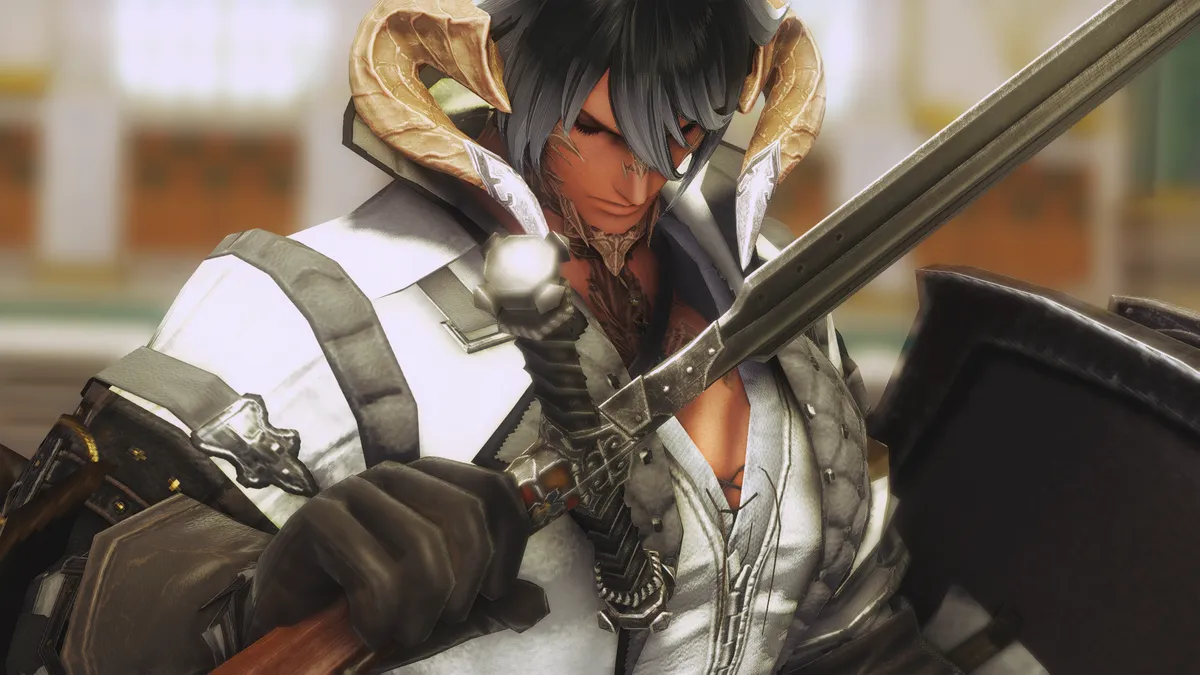
Thanks for reading up top this point! Here's some pictures of Shiro for you as a thank you for reading this far:
Further reading:
A Divinely-Inspired Gender: The Manang Bali Shamans of Sarawak by Joseph N. Goh
Uncovering Malaysia’s Rich History of Gender and Sexual Diversity by Mayang Al-Mohdar & Sarah Ngu
We have been brainwashed to believe this land is not queer by Vinodh Pillai and Pritha Khandhar
Gender and the Changing Feminist Discourse in Islam – A Socio-Historical Analysis by Esha Chaterjee
A Sinner in Mecca review – Islam, homosexuality and the hope of tolerance
Sexual diversity in Islam on the Muslims for Progressive Values website